
A static nightly rate
The same rate remains in place through quiet weeks, booked-out weekends, school holidays, and changing market conditions.
We manage daily rates, availability, OTA distribution, and listing conversion so your short-term rental decisions reflect real booking conditions—not a static nightly rate.
No fixed-income promise. Every audit considers your property, calendar, operating costs, and goals.
The revenue system
Start with the right diagnosis
An underperforming listing is often a system problem. The audit looks for the mix of rate, calendar, distribution, and listing signals that may be limiting a property’s booking quality.
The same rate remains in place through quiet weeks, booked-out weekends, school holidays, and changing market conditions.
The unit relies on a single audience while other relevant short-stay channels remain untested or unmanaged.
Minimum stays, owner blocks, turnaround rules, and high-demand dates are not working together deliberately.
Guests see the unit but lack the visual clarity, amenity confidence, or review reassurance to choose it.
Not sure which issue applies to your unit? The audit starts there.
Audit my propertyWhat we optimise
Choose a lever to see the decisions behind it. Each one influences the others, which is why a single static pricing rule is rarely enough.
Daily price discipline
We review booking pace, lead time, seasonality, local calendar signals, unit context, and owner guardrails before adjusting the nightly rate.
Minimum and maximum owner guardrails
High-demand date opportunities
Lead-time and booking-pace checks
Owner outcome: A more deliberate rate strategy for every booking window.
A pricing decision, made visible
The board below shows the types of questions that shape a decision. It is illustrative—not a live market feed or a promise of a particular result.
Selected input
How far ahead guests are searching and how quickly comparable dates are moving.
Inputs inform a recommendation. The final approach stays within the owner’s agreed rules and is reviewed in the context of the whole listing.
Rate versus occupancy
A revenue approach balances the price guests will accept, the quality of the bookings the listing attracts, and the calendar conditions around the unit.
Avoid: static pricing
A simple rule can miss periods where the unit is underpriced, overpriced, or not positioned for the demand that exists.
Avoid: occupancy at any cost
Lowering the rate simply to fill dates can ignore booking quality, high-demand opportunities, and the owner’s own operating constraints.
Aim for: a balanced system
Rate, availability, reach, listing conversion, and owner control are reviewed together before a recommendation is made.
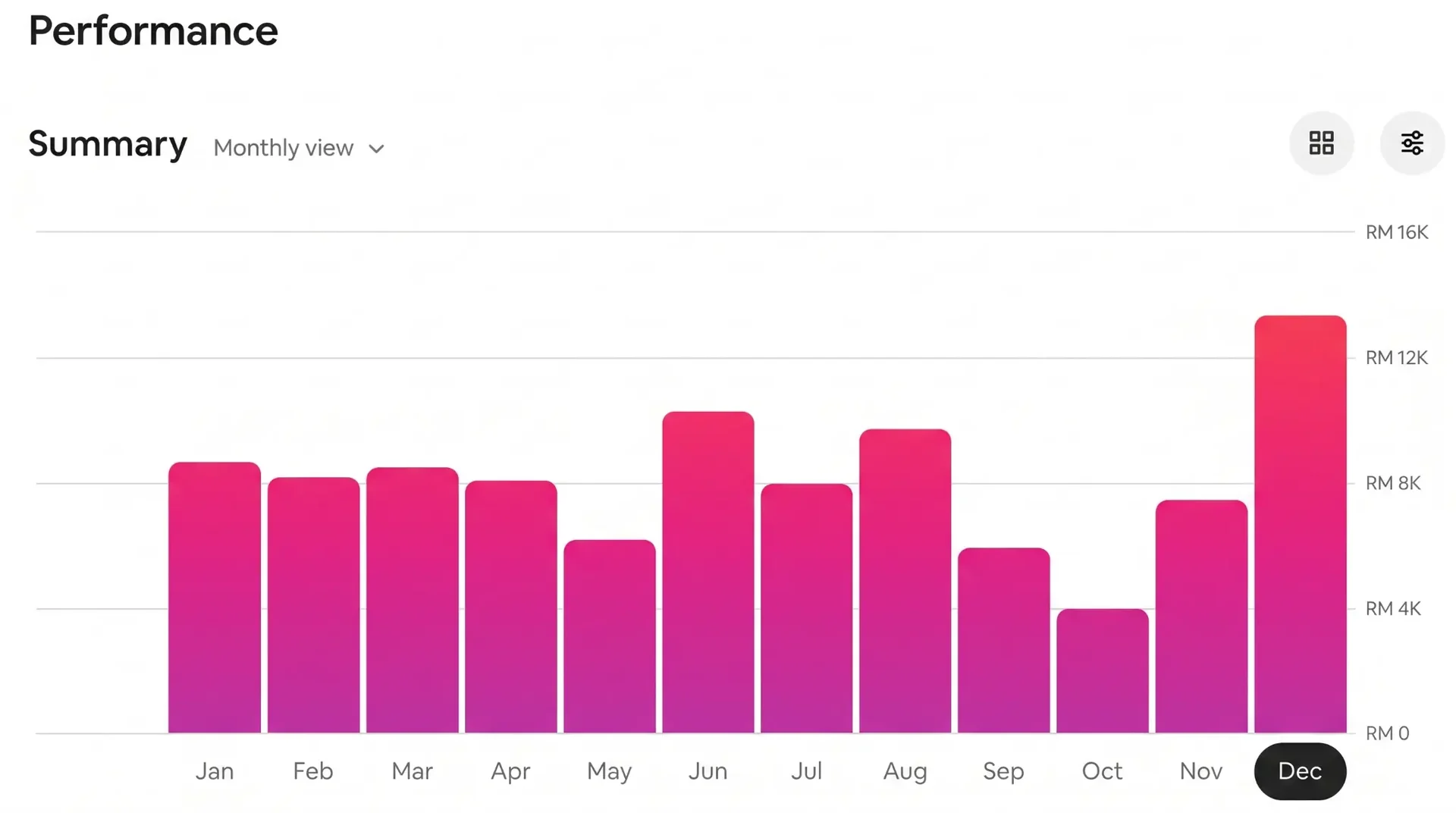
Evidence before assumptions
The chart shown here is an actual Airbnb host performance dashboard, redacted for privacy. It is presented as evidence of operating performance—not as a guarantee that another unit will produce the same result.
Your audit deliverable
A free revenue audit is an initial decision tool. It is designed to identify the next useful question for your property—not to offer a generic income promise.
A review of the current listing, rate approach, and booking path
A property-specific pricing and distribution hypothesis
Priority opportunities across rate, reach, calendar, and conversion
A recommendation on improving the existing listing or moving into full management
Your building or project name, unit type, current condition, existing listing link where available, and intended launch or improvement timing.
Share your unit context and we’ll review the rate, calendar, reach, and listing opportunities worth discussing.
Owner control, built in
The operating approach needs to work for the property and the owner. We build the decision rules around the realities of your unit, not a black-box instruction to accept every booking.
Personal-stay and blocked-date rules
Agreed pricing guardrails and escalation points
Monthly performance and booking reporting
A clear route to speak with the operating team
Kuala Lumpur demand context
Guest intent, accessibility, unit type, nearby demand generators, building rules, and listing competition shape the approach. That is why the audit begins with the actual project rather than a city-wide promise.
Use location context to start a property-specific conversation.
Choose the next useful path
Revenue optimisation can start with a listing review. When the property also needs guest operations, housekeeping coordination, and day-to-day execution, the audit can identify whether full management is the better fit.
Path one
Start with the rate, calendar, distribution, and listing conversion review. The audit maps where better decisions could be made before recommending a broader operating change.
Request a revenue auditPath two
For owners who want pricing decisions paired with guest operations, cleaning coordination, listing management, and owner reporting.
Explore Airbnb managementNeed to improve the unit before optimising it?
See the guest-ready design, furnishing, and launch route.
Direct answers for owners
If your question is specific to a building, JMB requirement, owner stay, or existing listing, include it in your audit request.
Explore owner resourcesA clearer next step
Share the building, unit, and current listing context. We will help identify the revenue-management questions worth solving first.